
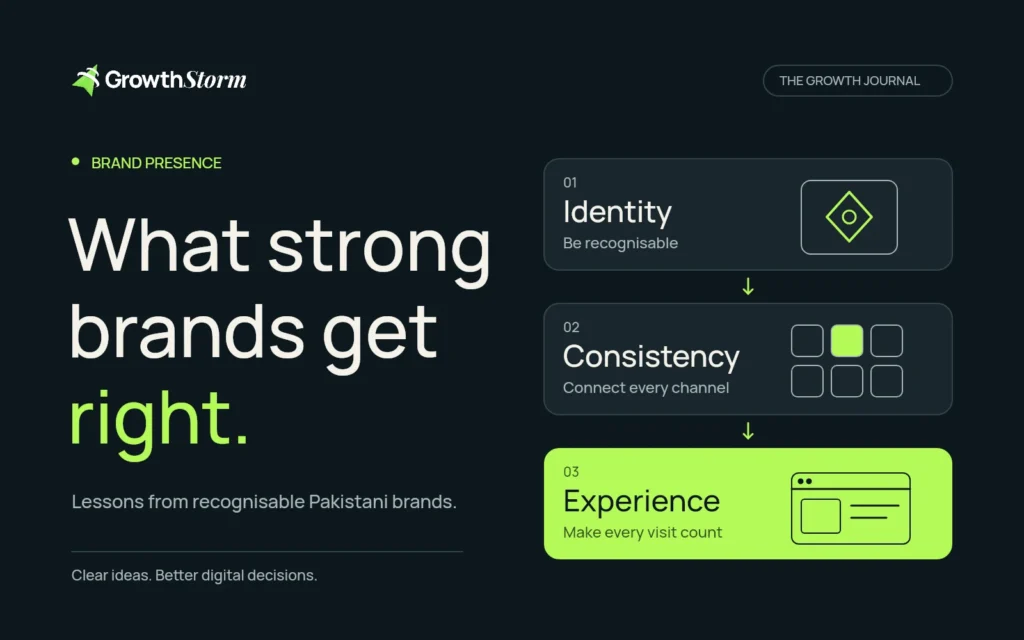
A strong online presence is not one thing.
These Pakistani brands with strong online presence show that digital visibility is not one thing.
Pakistan has plenty of brands worth studying — not because every tactic they use will fit a smaller business, but because the principles behind strong digital execution are transferable.
The examples below are not a ranking. They are useful reference points for different parts of the digital customer journey.
Khaadi: A Distinctive Visual World
Khaadi is a useful example of how a brand can carry a recognisable visual identity across ecommerce, campaigns and social content.
The lesson is not to copy its photography or design style.
The lesson is consistency.
When colour, imagery, typography and campaign language feel like they belong to the same business, recognition compounds over time.
What smaller businesses can learn:
- Create a visual system before creating more content.
- Use the same brand cues across website, ads and social media.
- Let campaigns change without making the brand feel like a different company every month.
Daraz: The Digital Experience Is The Product Too
Daraz is a marketplace, so its digital experience has to do much more than look polished.
Search, product discovery, categories, offers, checkout, order tracking and app behaviour all shape the customer experience.
That makes Daraz a useful reminder:
For ecommerce, marketing and product experience cannot be separated completely.
What smaller ecommerce brands can learn:
- Make products easier to find.
- Reduce friction between ad and product page.
- Keep offers clear.
- Treat mobile experience as core, not secondary.
- Measure what happens after the click.
Jazz: Building A Broader Digital Ecosystem
Telecom brands operate across products, apps, customer service, promotions and digital payments.
Jazz is a useful example of a brand extending beyond one core product into a wider digital ecosystem.
The lesson for smaller businesses is not to build an app for everything.
It is to think about the complete customer relationship.
What businesses can learn:
- Do not view each service in isolation.
- Make cross-sell paths clear.
- Use digital tools to reduce customer effort.
- Keep brand language consistent as the offer expands.
Foodpanda: Convenience As Part Of The Brand
Foodpanda’s digital presence is built around a clear customer job: find food, order quickly and know what happens next.
Its marketing can be playful, but the product experience still has to reduce friction.
That combination matters.
Strong branding can earn attention.
Strong UX helps convert it.
What businesses can learn:
- Do not let personality hide the next step.
- Make the core action obvious.
- Use content to build familiarity, but keep conversion paths simple.
Sapphire: Premium Presentation With Ecommerce Clarity
Fashion brands depend heavily on presentation, but a premium visual experience still has to support product discovery and purchase.
Sapphire is useful to study because the brand experience extends through photography, product presentation and ecommerce.
What businesses can learn:
- Premium does not mean complicated.
- Photography and layout shape perceived value.
- Product information still needs to be easy to scan.
- Consistency between campaign creative and store experience reduces friction.
Gul Ahmed: Legacy Brand, Digital Customer Journey
Long-established brands face a different challenge from startups.
They already have recognition. The task is translating that trust into digital channels without losing relevance.
Gul Ahmed is useful to study as an example of a heritage brand operating across retail and ecommerce.
What businesses can learn:
- Existing brand equity should support the digital experience.
- A website should make established businesses feel current, not dated.
- Offline and online customer journeys should feel connected.
J. (Junaid Jamshed): Clear Positioning
Strong brands are often easier to recognise because they know what they stand for and who they are speaking to.
J. is a useful example of consistent positioning across product, visual identity and communication.
What businesses can learn:
- A brand cannot speak clearly if its positioning changes every week.
- Know the audience.
- Know the value proposition.
- Make the message recognisable across channels.
OLX Pakistan: Trust In A High-Friction Category
Marketplaces involving buyers and sellers have a major trust problem to solve.
OLX is useful to study because its digital experience has to make discovery easy while also helping users feel safer navigating transactions between strangers.
What businesses can learn:
- Trust is part of conversion.
- Explain the process.
- Reduce uncertainty.
- Show useful safety or policy information where it affects the decision.
What The Stronger Brands Have In Common
The industries are different, but several principles repeat.
The brand does not look different every time the customer sees it.
The website, app or channel has a purpose beyond “having an online presence.”
The experience works where customers actually browse and buy.
The brand message survives across campaigns and platforms.
Customers can understand the offer and take the next step without unnecessary effort.
The ad promise and the website experience belong to the same customer journey.
What A Smaller Pakistani Business Should Do First
You do not need a national-brand budget to apply the same principles.
Start with the basics:
- Make the website easy to understand.
- Use one consistent visual identity.
- Make mobile contact or purchase actions obvious.
- Choose the channels that match how customers buy.
- Keep business information accurate.
- Track meaningful enquiries or purchases.
- Improve one bottleneck before adding more activity.
THE TAKEAWAY
Conclusion
A strong online presence is not created by posting more often or copying the biggest brands.
It comes from consistency, clarity and a customer journey that works.
The useful question is not:
“What is Khaadi, Daraz or Jazz doing?”
It is:
“What principle are they applying — and how can our business apply that principle at the scale we actually operate?”