
Editorial review: 5 October 2026
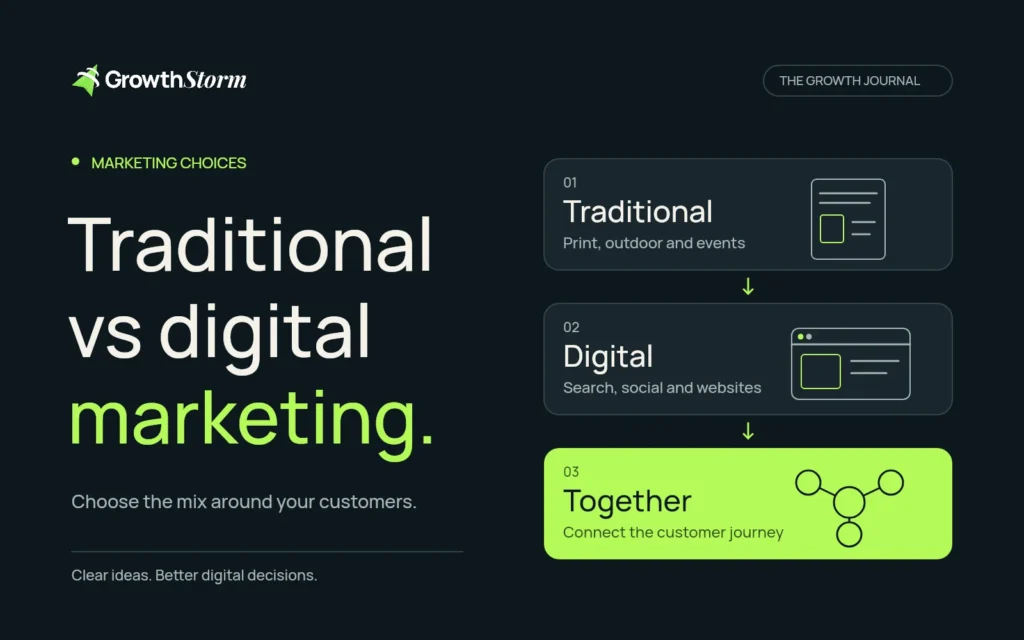
Traditional marketing vs digital marketing is a choice about audiences, channels and the way your business reaches customers.
Choose around the audience, buying journey, budget and measurement available—not a blanket claim that one approach always wins.
What the two approaches include
Traditional marketing includes print, outdoor advertising, radio, television, events and physical materials. Digital marketing includes websites, search, online advertising, social content and email.
The categories often work together. A sign can introduce a local service; the customer can then search for its website, check the details and send an enquiry. The website still needs to explain the offer well.
Compare the practical differences
| Decision | Traditional | Digital |
|---|---|---|
| Audience | Depends on placement, readership, event or geography. | Depends on searches, platform audience, targeting and content. |
| Cost | Placement, production, printing and distribution may apply. | Delivery time, agency work, media, software and production may apply. |
| Changes | Reprinting or changing booked placements may require additional work. | Many assets can be revised, subject to platform review and production needs. |
| Measurement | Use enquiry sources, codes, calls and customer feedback where practical. | Use trackable events and platform reports, with attribution and privacy limits. |
| Customer action | Usually requires a separate call, visit or online step. | Can connect directly to a relevant page, form or checkout. |
Neither category belongs to a single age group, and neither is automatically inexpensive. Compare the actual audience and scope.
Start with how the customer chooses
A local contractor may benefit from a credible sign or referral alongside a mobile service page. An education provider may combine an event with programme information and a clear admissions enquiry. A retailer may use packaging, physical displays and online product pages together.
These are planning examples, not measured Growth Storm campaign results. Test the mix against your own customer behaviour and available budget.
Keep the journey connected
- Use consistent offer and contact information across materials.
- Send people to the page that matches the message.
- Check that mobile forms, calls and checkout work.
- Ask how people heard about the business when appropriate.
- Give the team a clear way to record and follow up useful enquiries.
Extra attention is easily wasted if the next step is confusing or nobody responds.
Compare total scope before spending
Include production and delivery costs as well as placement fees. For digital work, agency fees and advertising spend are separate. For print work, design files and physical printing are separate unless included in the agreement.
Agree what can change, how approvals work and what will be measured. Start with a manageable activity and review its role before expanding.
Use the measurements you can trust
A reported click is not a confirmed customer. A remembered billboard is not a recorded sale. Use the available data to understand the stages of the journey, then add sales or enquiry feedback where your process allows.
Digital reporting can be useful without being complete. Offline progression, consent choices and platform attribution affect what is visible.
Find the right next step
Explore our services by business need or your industry’s buying journey. For brochures and other materials, review graphic design scope.
If you need help choosing the mix, request a Growth Review. We clarify fit and scope before recommending delivery.